Leica Lounge with Photographer Andrew Kaufman | Thurs, September 4, 2014 | 7pm - 8:30pm
Free Event
Leica Lounge is a lecture series hosted by Leica Store Miami which features presentations by local professional photographers. Held monthly, these free events are designed to create and inspire the local photography community through sharing images and exchanging ideas.
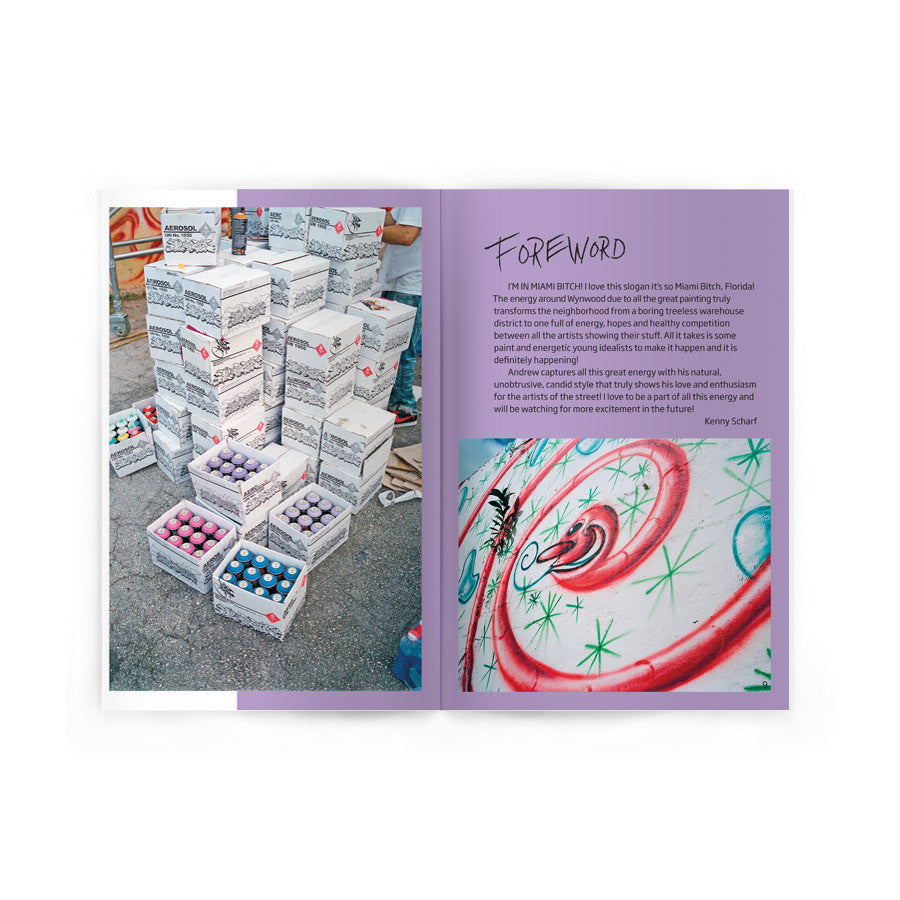
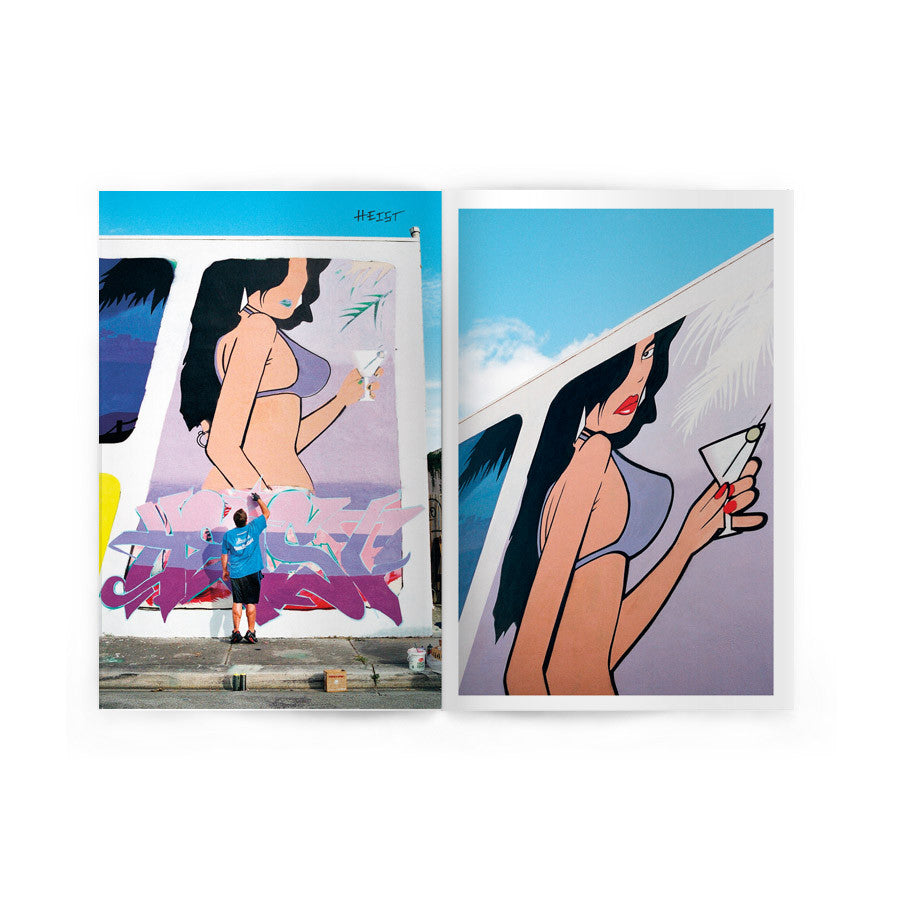
Join us in the Leica Lounge on September 4, 2014 with photographer Andrew Kaufman. He will be discussing his recent book I'M IN MIAMI BITCH! The Disappearing Street Art of Wynwood. In this documentary project centered around the Wynwood neighborhood of Miami, Andrew states "Photography is the most permanent longest lasting proof of street art. There is no way to preserve street art except to photograph it before it fades, is toyed with, buffed or written over. Street art, by its very nature is a fluid art form, constantly evolving because of the landscape, materials, politics, weather etc. It is through photography that street art can be conveyed to the world. Images of the artists and their works are reproduced and disseminated through books, magazines and the internet."
Kaufman's book will be available for purchase and signing.
About Andrew:
Andrew Kaufman also known as AK FOTO is an artist that doesn't fit the mold of many of his contemporaries. He produces a tremendous amount of personal work, in every photographic format imaginable, and is really someone impossible to categorize. One day he might be shooting 6x7 for an ad client and the next 4x5 for a personal project. He has worked for magazines, agencies, art directors, ad clients and collectors and has somehow managed to avoid the mass homogenization of imagery that now seems to be prevalent in those fields.
Andrew's current clients include: State Farm, The Home Depot, Rolling Stone, Leo Burnett, DBB, Marlboro, NFL, TIME, OUTSIDE, Simon & Schuster, Penguin, Arthur Frommer's, Worth, Smithsonian, Audubon, Popular Mechanics, Golf Digest and many, many others.
These are my season preview covers published today in the Miami Herald. Last night I photographed the Miami Dolphins as they hosted the St. Louis Rams at Sun Life Stadium. Last week it was against the Dallas Cowboys.
Miami Dolphins defensive tackle Garrison Smith (68) puts a choke hold on Rams quarterback Austin Davis after sacking him in the second quarter. Davis appeared to be gasping for air after the play.
Traveling around the world on a private jet with one of the biggest rock bands of all time is a dream gig for any photographer, and that’s just an average day for music and sports photographer David Bergman. Join us at Leica Store Miami to meet, mingle, and swap stories with a photographer who has over a dozen Sports Illustrated covers to his credit and is also responsible for creating one of the 21stCentury’s most iconic images, the Gigapan photograph of the inauguration of President Barack Obama. Bergman just completed a world tour as Jon Bon Jovi’s photographer, and will be bringing along a copy of his new photo book, Work. Feel free to bring some of your own photography to share as well! Drinks will be provided.
In early August 1994,
tensions between the Castro regime and the United States heated to a new
boiling point. The Cuban president was threatening to unlock his country’s
emigration gates for the first time since the Mariel boatlift, 14 years
earlier. Meanwhile, a man, who was attempting to hijack a ferryboat and flee
the Communist nation, shot and killed a military officer.
The Miami Herald sent me to
cover the disturbances that ensued along El Malecón, Havana’s east coastal
seawall. Now known as the Maleconazo uprising, a protest against government
policies in Cuba.
By the time I entered the
Island the uprising had been quashed.
The next several days I
spent photographing pro-government rallies, scenes around Old Havana and
reconnecting with lost family members.
I was operating in a vacuum,
unaware of what was brewing: Cuban television wasn’t reporting the story, there
was no Internet available and my ability to talk to my editors back in Miami
was minimal.
In the middle of the night I
received a tip that people were leaving on rafts off the coast of Cojimar, east
side of Havana. I hailed a cab, a circa 1950s Chevy. It was pitch black. Still,
I could see the outline of homemade rafts bobbing in the water, some,
overflowing with passengers.
Over the next several days,
I walked into homes of the balseros (rafters) and watched them use their
bloody, swollen hands build their vessels. At daybreak, I would run from one
end of the beach to the other chasing those casting off on their dangerous
voyage. Eventually, I hitched a ride on the back of an old bicycle. The owner,
I figured, could pedal me around Cojimar much faster.
These photographs capture
what I was seeing firsthand: the armada of rickety rafts, the faces of agony
and desperation as many, tried and failed and tried again, to flee their
homeland.
Video of violinist Lizbet Martinez by Jose Iglesias
A revisit to the Cuban Balsero crisis and the people who found freedom in America
Miami Herald columnist Fabiola Santiago recalls the stories of Cuban refugees she met two decades ago in the Guantánamo camps and how they carved out new lives in America.
"Cuban rafters: 20 years after the crisis" is a nine-minute retrospective co-produced by the Miami Herald, el Nuevo Herald and Univision23 on the 1994 mass exodus out of Cuba in that brought some 35,000 people to the United States.
When the tiny Guantánamo-bound jet took off from the Fort Lauderdale airport, the door handle fell into my lap.
The handful of journalists on board laughed nervously, eyeing the ripped roof cover and beat-up seats of the Fandango Airlines commuter under contract by the federal government to shuttle journalists to the U.S. Naval base on the eastern end of Cuba.
“I hope this is not an omen,” I remember someone saying.
The unsettling start of our trip that crisp day in 1994 was like an omen, but it was the least of our worries. We were on our way to report on the lingering limbo of the Cuban balseros without a country and enduring wholesale detention in a tent-city metropolis set up by the Clinton Administration in a remote no-man’s land.
It had already been an extraordinary year.
That summer, furious at unprecedented protests and chants of “Freedom!” rising from people gathered at the seafront Malecón in Havana, Cuban leader Fidel Castro threatened to unleash another exodus — and he made good on it, allowing people to leave the island by whatever means. READ MORE HERE
Read more here: http://www.miamiherald.com/2014/08/16/4293221/a-revisit-to-the-cuban-balero.html#storylink=cpy
Read more here: http://www.miamiherald.com/2014/08/16/4293221/a-revisit-to-the-cuban-balero.html#storylink=cpy
Our entries fees are designed to be very low so the worldwide community of photographers can participate. Your submissions fees help us defray the costs of the venue and the Art Fair engineering, as well as allow us to promote the artists and galleries participating in the Festival.
Miami Photo Salon is an International Photography Festival that will take place during Art Basel with plans to continue yearly. The goal of this project is to create a salon-style venue for photographers to showcase and exhibit work to international audiences along with artists solos and photo galleries. This event will take place in downtown Miami, where foot traffic between visiting art fairs will bring in thousands of visitors, both from the local community and international tourists. Dates for the event December 2-5, 2014.