Saturday, January 26, 2013

LeBron James Tackles Fan


By Al Diaz
aldiaz305@aol.com
One of the requirements of my job is to transmit photos during a sporting event to make deadline for the Miami Herald’s section front and for any online needs.

During a basketball game I have to walk off the court to the media room where I “ingest” my photos using Photo Mechanic editing software and sending the photos FTP to the office.

When I do this there is always a chance that something can happen that goes viral, a doozie that all the sports writers talk about, such as a spectacular play in the game or a major injury. Lets say the Miami Heat’s Chris Bosh injures his back during the NBA playoffs, prompting doubt that the team could reach the finals without him. I’m glad I captured that moment last year.

Not last night. I missed it when a jubilant LeBron James tackles a fan that sinks a basket from mid court with a half-armed hook shot to win $75,000! I was inside transmitting.

Here is the ultimate highlight of Michael Drysch, a 50-year-old computer technician, shooting the shot of his life but I shot none.


Here is an updated story on Drysch, click here.

Sunday, January 6, 2013

PictureProApps is a Game Changer.


Sports photographer Steve Mitchell has been telling me about the power of his new iPad mini running PictureProApps. During the Orange Bowl game I watched photographers jaws drop when they saw how quick and easy Steve downloads, edits and transmits his images between whistles. He’s been raving about it for weeks! Once this new workflow catches on it will be the new norm for transmitting on tight deadlines.                                                                                                                                                                    Al Diaz  
smitchellphoto@me.com

The new PictureProApps is a game changer for working photographers on the run and on deadline. 

Two hours before a recent sporting event I found myself staring into the computer screen. I’m wondering how best to utilize my iPad mini, besides surfing the web and checking email. So I googled, ‘transmitting with your iPad’. Holy cow, there it is! I found, "PictureProApps". An app built for the working photojournalist.

After downloading the app I quickly noticed a few changes that would help improve some of the app’s features. For starters, the 0 to 100 scale for compressing the size of photos had no indicator for the resulting megabyte size of the image. 

As a working photojournalist who is constantly working on a very tight deadline the 0 to 100 scale would not work for me. Too much math for me to try and figure out. Even though I was extremely excited about this app. I decided to contact the software developer David Shields about changing some of the existing features and adding a few.  

A few tweaks here and there made all the difference in the world. David came up with a design based on the browsers many photojournalists use on computers in the field.  

At a recent football game this season I was working the end zone as the Miami Dolphins battled the Buffalo Bills. The Dolphins were driving down the field when running back Reggie Bush reached for a touchdown and I captured the decisive moment. Now I had to make a quick decision. Do I run back to the media center with all my gear to transmit the key play or do it faster using the new PictureProApps? 

Since that day it’s now an easy choice with the iPad mini always tucked away in my Think Tank Photo Slim Changer belt pouch. I download the photos and tweak the captions using code replacement on assignment information already set up in the ITPC field. 

Code replacement is an automated tool that generates various collegiate and professional sporting rosters so photographers can upload the teams names and numbers quickly. Yes, the app allows you to use this feature.

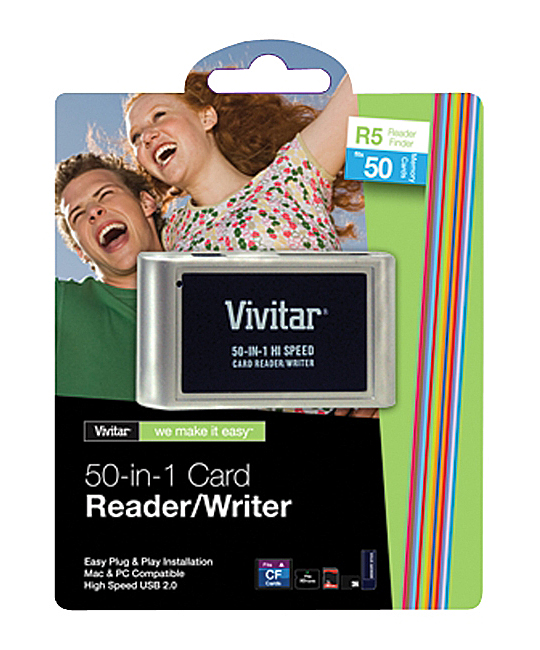
After trying several card readers I found the Vivitar 50-1 Hi Speed Card Reader / Writer  works best with the iPad mini. I tether it with Apple's "Lightning to USB camera adapter" to upload my photos to the iPad mini.

My new workflow allows me to FTP my images for my client faster than any of my wire service competitors. Yes the app allows me to select various upload options including FTP
Steve Mitchell, a professional sports photographer for the past 20 years, is currently working as a freelance photojournalist based in South Florida. Steve attended the New England School of Photography in Boston, Massachusetts and this is where he started his career. Steve is a contract photographer for USA Today Sports Images. His work has appeared on billboard ads and in major publications including Sports Illustrated, ESPN Magazine, USA Today, and the Los Angeles Times. Steve has covered several World Series, The Super Bowl, Sony Ericsson Tennis, MLB, NHL, NFL and the NBA finals. Sports photography is Steve's passion.

Flashes of 2012

The Miami Herald asked staff photographers to submit images from the past year that meant the most to them, and to share their thoughts. Scroll down to see their picks. 
Al Diaz

A bombardment of 25,000 tomatoes (10,000 pounds) was launched by a mob on Saturday, Feb. 11. Tobacco Road, Miami’s oldest bar, provided the tomatoes for the city’s first Tomato Smash and Bash. Even covered in protective plastic, my camera gear and I ended up coated with tomato paste. I felt a bit tousled, like a bowl of spaghetti. 

Veteran Miami Herald staffer Al Diaz, 54, is a member of the Herald news team that won the 1993 Pulitzer Prize Gold Medal for the newspaper’s coverage of Hurricane Andrew. Diaz earned his journalism degree from the University of Florida in 1983, and was hired by The Herald upon graduation. He is a first generation Cuban American. Diaz and his wife, Cindy Seip-Diaz; their children, Angelika and Bartek; and several pets make their home in Coral Gables. 

Marice Cohn Band 
It’s always a challenge for me to shoot sailing because I really know nothing about the sport — only that it’s beautiful, fast, and always surprising. Such was the case with the swift crossing of three sleek sails during this past year’s Rolex competition on the waters of Biscayne Bay, Jan. 27.

Marice Cohn Band has been a photographer at The Miami Herald since 1979. A native of Miami, Cohn Band graduated from Florida International University with a BFA in photography. As well as working full-time at The Herald, she has been a Girl Scout leader for 21 years in Miami Beach, where she lives with her husband, Michael. She is the proud mother of three daughters: Jessie, Samantha and Alexandra. 


C.W. Griffin
Sports photography is a challenge that requires skill, reflex, game knowledge and a little luck. When all those things come together, the photographer has a chance to capture an extraordinary moment — like this one, a touchdown celebration involving the Miami Dolphins’ Daniel Thomas, (33), Charles Clay (leaping, foreground) and Davone Bess (partially obscured) during a November game against the Seattle Seahawks. Covering a game is like going fishing: There will be opportunities to catch a big one. Your job is to seize them. 
C.W. Griffin, has been a staff photographer at The Herald for the past 29 years. His work has appeared in National Geographic, Smithsonian and Time, and in multiple volumes of the Day in the Life photo book series. He has taught at the University of Miami for more than 10 years, and also teaches at the Little Haiti Cultural Center with Iris PhotoCollective. While serving in the military, he was the first African American to be named military photographer of the year for all branches of service. 


Peter Andrew Bosch
Michael Hadler is called safe at home during a Miracle League game in Pembroke Pines last August. The league is for kids with disabilities. The joy on their faces as they scored was inspirational. So too were the cheers from their parents. 

 Peter Andrew Bosch, born in Sunderland, England, has been at The Herald since July 4, 1983. He attended the University of Kansas, where he received a degree in design. 


Charles Trainor Jr. 
My favorite image is from the Miami Heat’s 2012 media day. I had LeBron James squeeze a basketball. Later we Photoshopped the Earth into the picture. On the final squeeze, he roared like a lion, and the room went silent.

Charles Trainor Jr. joined The Miami Herald in 1981, and has shot most of the major news events that have impacted South Florida in recent decades. Highlights include his images of the Cuban rafters’ exit of 1994, the wreckage left by Hurricane Andrew and a project called ‘The Corridor’ that chronicled life in a section of South Florida over 18 years. 


Walter Michot 
I love photography and I love horticulture, so this was a great assignment for me. Angles, size, relationships and timing are the daily challenges of a photographer. It was June 6, 2012, a Wednesday morning. Approximately 40 really old trees were being dug up and moved from the old Brickell Tennis Club, future site of Brickell CitiCentre, to the under-construction MAM/Museum Park at Bicentennial Park. This image shows a tree-bearing barge moving north through the Florida East Coast Railway Bridge. 

Born and raised in Fort Lauderdale, Walter Michot attended Chaminade High School and went on to major in psychology and management at Loyola University of New Orleans and Florida State. While awaiting a job with the state of Florida, he decided to pursue his hobby of photography as a profession. He has been shooting pictures in South Florida for 39 years, 29 of them for The Herald.

Emily Michot 
This photo was shot in March on yet another media tour of the new Miami Marlins Park. This particular tour was for the media to sample and photograph the ballpark food, but when I saw these workers cleaning the windows, it made for a much better picture. 

Born in Fairbanks, Alaska, Emily Michot has been a staff photographer for The Herald for 17 years, and still loves every moment of it. Michot first acquired a passion for photography as a child in her father’s darkroom as he took photos and developed them for the Air Force as a public affairs officer. Michot later studied photography at the University of Florida and the Art Institute of Fort Lauderdale. Michot is married to Walter Michot, also a Herald photographer, and they have two sons. 


Patrick Farrell 
Nearly three years after Haiti’s devastating earthquake on Jan. 12, 2010, Catiana Pierre, 11 ( left), and her brother Dickenson Prudhomme, 6, take cover from the relentless rain of Tropical Storm Isaac last August. Wind and rain from the storm collapsed their family’s tent-home the night before. The children escaped up a nearby hill to watch the rising water of the Riviere Grise, which runs by the Marassa 14 Tent City and serves as a constant reminder of Mother Nature’s threats to recovery efforts. 

Patrick Farrell has been a photographer at The Miami Herald since 1987. He was the recipient of the 2009 Pulitzer Prize for breaking news photography for his images of Haitian storm victims. Farrell graduated from the University of Miami in 1981 with a major in film. He grew up in Miami, the seventh child in a family of 12. He is married to writer Jodi Mailander Farrell, and they have two daughters: Annie, 13, and Lucy, 12. 


Marsha Halper 
On Aug. 31, The Miami Herald photo staff was issued a challenge: find a page one-worthy image reflecting the start of the Labor Day weekend. Months earlier, at Miami International Airport, I had seen this beautiful, multi-hued wall of windows, part of a sound-and-light installation, and made a mental note to return to photograph it when the time was right. It was worth the wait: My photo of travelers at MIA making a colorful entrance to the holiday weekend ran prominently on our front page the next day. 

Marsha Halper has been a Miami Herald staffer since 1985. She was born in Baltimore, and is a graduate of Guilford College in Greensboro, N.C. Her work has been featured in Time, Newsweek and Mother Jones magazines, and was selected for the 1985 Hortt exhibition at the Museum of Art Fort Lauderdale, and for a 1988 show at the St. John’s College gallery in Santa Fe, N.M. 


Carl Juste 
 “Death is always harder on the living” — those words have come to mind so many times over the years that it is almost a cliché. On Dec. 14, 2012, the nation endured what seemed to be the breakpoint — the Sandy Hook Elementary School shooting that killed 20 children, brought the nation and its newly reelected president to tears and reignited the debate over gun control. For many in South Florida, gun violence has become the norm, with arguments and lovers’ spats resolved with the pull of a trigger. On Nov. 20, less than a month before Sandy Hook, 13-year-old Lourdes Guzman-DeJesus was riding in a school bus with her younger sister and seven other children when another student took a gun out of his book bag and accidentally shot her in the neck. The .40-caliber handgun came from his home. While covering Lourdes’ funeral, seeing her mother Ady Guzman-DeJesus weep inconsolably over the casket, another phrase came to mind — “Lost but not forgotten.” 

 Born in Port-au-Prince, Carl Philippe Juste came to the United States with his politically active family in 1965. Raised in Brooklyn, he arrived in Miami in 1973, earned a bachelor’s degree at the University of Miami and has worked at The Herald since 1991. Assignments have taken him to Pakistan, Iraq and Afghanistan, as well as to the nation of his birth. Juste is co-founder of Iris PhotoCollective, a collaboration to create a new context for exploring and documenting the relationship of people of color to the broader world. 

Saturday, December 29, 2012

Miami Herald Photojournalist Tim Chapman Retires

Illustration by Marco Ruiz     


By Al Diaz
aldiaz305@aol.com

Smack in the middle of Miami’s Cocaine Cowboys and their illegal drug trade I decided to buy a police scanner. Within hours, the purchase propelled me into harms way, launched my career and allowed me to meet photojournalist Tim Chapman.

The year 1979, a lone Miami Police officer staking out a Little Havana home calls for back up when the suspects inside decide to flee with their illicit drugs. Not far to drive from my childhood home, I arrive hearing sirens blaring, tires screeching and see guns everywhere.

Miami Police check Tim Chapman's credentials in 1979.
In the middle of all this madness I see a photographer in the middle of the street standing face-to-face arguing with a cop. I shoot a picture. The officers supervisor approached the rookie cop and said to leave Chapman alone, he’s seen more action than you have.

The next day Chapman’s photos are spread across the front page of The Miami Herald and mine on the AP wires.

After 40 years on the job, Tim Chapman is retiring from The Miami Herald on December 31. He’s covered wars, hurricanes, riots, earthquakes, mass exoduses from Cuba, kidnappings, plane crashes, death and mayhem including Guyana’s Jonestown massacre in 1978.

He’s been on vacation this week, Chapman’s last day on the job actually working? December 21, just in case the Mayan Prophecy of an apocalypse were to come true and it needed to be covered.


Photo By Bill Cooke    
By Carl Hiaasen
Miami Herald Columnist
Friend and Accomplice
There’s not enough space on this page for every Tim Chapman story, but most are true. He’s been a legend in this business for decades. With retirement he ascends to mythic.

Yes, he once drove cross-state in a Herald van with a loaded gun, a bloody knife and a severed alligator tail. Yes, he once used the lens of a company Nikon to batter some macho fool who’d tried to push him off of public property. (Tim then straddled the poor twit and snapped off 36 frames.)

Yes, he once tested an electric dog collar on himself before fitting it on his Labrador. (The sight of Tim flopping on the kitchen floor was all that the dog needed to see; from then on, the animal came running whenever Tim called).

And, yes, he once paid a voodoo priestess in Haiti to put a curse on an unpopular photo editor back in Miami -- and, yes, it worked.

The line between fearless and crazy is hazy, and sometimes we weren’t sure if Tim had crossed over. It wasn’t because of a death wish that I always asked to ride with him; I just knew that he always went where the big news was. Always.

One afternoon, during one of Miami’s bloody episodes of civil unrest, Barry Bearak and I rode into the riot zone with Tim, who wore a flak jacket and told us to stay low in our seats because of the sniper fire. Whenever he’d jump out to shoot pictures, we’d dart around interviewing bystanders.

After about an hour Tim decided he was in the mood for (I swear to God) watermelon. So he screeched to a halt beside a fruit stand on one of those smoldering streets, and there he purchased two freakishly large melons.

As he walked back toward the car – and he took his sweet time – Barry and I were debating which of us was going to drive after Tim got shot.

He didn’t even get grazed, of course, because he always knew how long to stay, and when to run. Once we were in a Nassau crack house talking to (who else?) crackheads, when Tim turned to me and quietly said, “It’s time to go.”

Our interview subjects had been speculating as to the potential resale value of Tim’s camera gear and, unknown to me, two of them had gone to a bedroom to get guns. Tim and I took off, only to find that our driver had already fled the neighborhood. 

Most important: The photos that Tim took inside that house, way before crack cocaine ever reached America, were phenomenal.

Wise photo editors let Tim do what he did best, which was cover the news. The one radio dispatch guaranteed to pitch him into a seething rage: “Hey, Tim, we need some feature art.”

You did not send Chapman to take pictures at Art Basel. You did not send him to shoot a Dolphins game. You did not send him to the freaking Silver Knights.

You sent him to fires and wars and plane crashes and mass suicides in Guyana. You sent him to crawl the jungles of Nicaragua with armed rebels. You sent him to shoot the guarded island mansion of a crooked prime minister (where he rented a plane and flew in low “with the sun at our backs”).

You sent him to a triple-homicide in Medley (or was it a quadruple?), where he bustled around as cheerily as Martha Stewart in an herb garden. I remember because I was there.

Nobody who ever set foot in the Herald newsroom loved hard news more than Tim Chapman, or fought harder to get it into the paper. The business has changed, but Tim never did, never would.

And those of us who got to ride with him in those kick-ass days cherish every harrowing memory.

Tim Chapman's send off party at The Miami Herald                                      Photos By Al Diaz
Rick Hirsch with a Miami Herald spoof page for Tim Chapman 


Jordan Levin with Tim Chapman

David Landsberg, President and Publisher with Chapman

Photo Editor David Walters hands Chapman a cigar lighter.
The boss, Roman Lyskowski hands Chapman a copy of  The Exile Experience
on the Cuban Exodus.
Chapman plunges a cigar in his going away cake and mocks lighting it up.


Friday, December 28, 2012

Buy an iPhone, voila, you are a photojournalist!


"A billion roaming photojournalists" How do I compete against that? Who needs a four-year photojournalism degree? Buy an iPhone, voila, you are a photojournalist!

Here is the latest iPhone 5 commercial from Sprint.


This post is not a commentary on photojournalists using iphones as a tool.

It is meant to highlight the Sprint video and comment on the language used in an advertisement to achieve a desired effect on people. It implies that a consumer is a photojournalist just because they are using an iPhone 5 to take photos and post photos on social media.

I am sorry but if I buy a hammer does that make me a carpenter?
If I buy a thermometer, voila, I am one of a billion roaming doctors?

Consumers have been using cameras for over a century. I don't recall anyone ever calling these consumers, who share their photos, as photojournalists.

Photojournalism is distinguished from other close branches of photography (e.g., documentary photography,social documentary photographystreet photography or celebrity photography) by complying with a rigid ethical framework which demands that the work is both honest and impartial whilst telling the story in strictly journalistic terms. Photojournalists create pictures that contribute to the news media.  
Source: Wikipedia


Monday, December 24, 2012

The Legal Lens: Instagram's Legal Snafu

The Legal Lens
with Samuel Lewis

Q. Over the last few days, there have been quite a number of postings on Facebook about Instagram, with various people and organizations threatening to boycott the service.  Will Instagram have the right to license images for advertising purposes?

A. What you’ve witnessed is the result of a company attempting to impose heavy-handed terms and conditions on its users.  The uproar started when Instagram announced that it would be changing its Terms of Use (TOU) effective January, 2013.  While perhaps not Instagram’s intention, under the new TOU, users give Instagram the right to use a user’s name, likeness, and even photos in advertising.  The TOU also contain a series of representations, including that the user posting photographs is not violating any privacy rights, and that the user will pay all royalties and fees owing to any person by virtue of a photograph being posted to Instagram.  Separately, these terms can be trouble enough, but together, they have the potential for creating a nightmare situation.

Imagine for a moment that the new TOU go into effect, and that some time later, you used Instagram to post a photograph of a professional athlete prior to a sporting event.  Under those TOU, Instagram has the right to license that image for advertising purposes, and Instgram is not obligated to share the license fees/royalties with you.  Now, it’s bad enough that you’re missing out on sharing in the license fees for the commercial use of one of your images, but under this scenario, the TOU go a step further to add insult to injury.  Since you probably didn’t obtain a model release from the athlete featured in your photo, the athlete now has a claim for the use of his or her image in connection with advertising.  Under the TOU, however, you, the photographer, who used the Instagram service, are responsible for paying “all royalties, fees, and any other monies owing any person by reason of [photos] you post on or through the Instagram service.”  So at the end, Instagram gets to keep the license fees for the commercial use of your photo, and you get to pay the athlete who didn’t sign a model release.

In response to the TOU that were scheduled to goes into effect, National Geographic—who in early December was ranked as the number 1 media brand on Instagram with 588,000 Instagram followers—posted an announcement that it was suspending new posts.  The announcement reads:  “@NatGeo is suspending new posts to Instagram.  We are very concerned with the direction of the proposed new terms of service and if they remain as presented we may close our account.”

Q. You mentioned that the TOU were scheduled to go into effect.  Will they be going into effect?

A. That really seems to be the big question right now.  Instagram’s co-founder and CEO, Kevin Systrom, announced that it was not his company’s intention of selling users’ photos.  However, that did not stop numerous celebrities and companies from announcing publicly that they would discontinue use of Instagram.  In an apparent effort to avoid losing more users over the TOU snafu, Instagram has now scrapped the TOU that were scheduled to go into effect on January 16, 2013, and replaced them with a new set of new terms.  While the most recent TOU seem to omit some of the language that sparked the uproar, it still includes some potentially problematic verbiage.

Under the most recent TOU, the license that users grant to Instagram is “royalty-free” and “sub-licensable,” meaning that Instagram will have the right to license the photos posted through the service without having to share royalties or license fees with the photographers.  The only exception to the license is Instagram’s privacy policy.  While it may be possible for individual users to indicate that photos are private and not for public viewing, that limitation won’t help entities like National Geographic.

It also bears noting that the new TOU may not avoid the nightmare situation I’ve already described.  They are just not as in-your-face as the TOU that sparked the uproar.

The new TOU also contain some fairly comprehensive language that limits Instagram’s liability, requires its users to pay the cost of defending Instagram against claims made by virtue of images posted to the service, and a provision that significantly limits the time in which a user may bring a claim against Instagram.

The new terms also include an arbitration provision.  Arbitration is a form of alternative dispute resolution, and it allows people to resolve their disputes as they would in court.  There are pros and cons to arbitration, which are more thoroughly explained in my recent article, Arbitration Friend Or Foe? (http://www.digitalphotopro.com/business/arbitration-friend-or-foe.html) which appeared in the November 2012 Digital Photo Pro magazine.  One potentially positive aspect of the TOU is that it allow users to opt out of arbitration by notifying Instagram in writing within 30 days of the date the user became subject to the arbitration terms (for existing users, that’s within 30 days of when the new terms go into effect), and the notice must be sent to:  Instagram, LLC ATTN: Arbitration Opt-out 1601 Willow Rd. Menlo Park, CA 94025.  Given the time-limitation, users of the service should decide for themselves whether to reject the arbitration and notify Instagram of that decision.

The new TOU contain many more changes than I’ve mentioned.  Anyone who uses Instagram should really compare the old terms and new terms to get a sense of what will be changing.  The current terms can be found here:


and the terms scheduled to go into effect on January 19, 2013 can be found here:


Samuel Lewis is a Board Certified Intellectual Property law specialist and partner at Feldman Gale, P.A. in Miami, Florida, and a professional photographer who has covered sporting events for more than twenty-five years.  He can be reached at SLewis@FeldmanGale.com or SLewis@ImageReflex.com.

Note:  The information appearing in this blog entry is not, nor is it intended to be, legal advice, and should not be construed as such.  Rather, the information is provided solely for educational purposes by providing general information about the law.  This blog is not a substitute for legal advice from an attorney licensed to practice in the state where your business is based or where you live.