|

Think Tank Photo

Showing posts with label Getty Images. Show all posts
Showing posts with label Getty Images. Show all posts
Monday, November 25, 2019
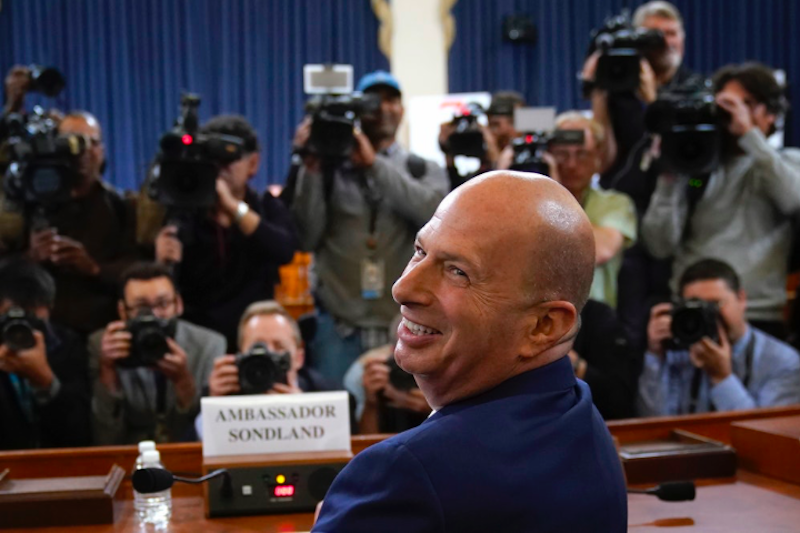
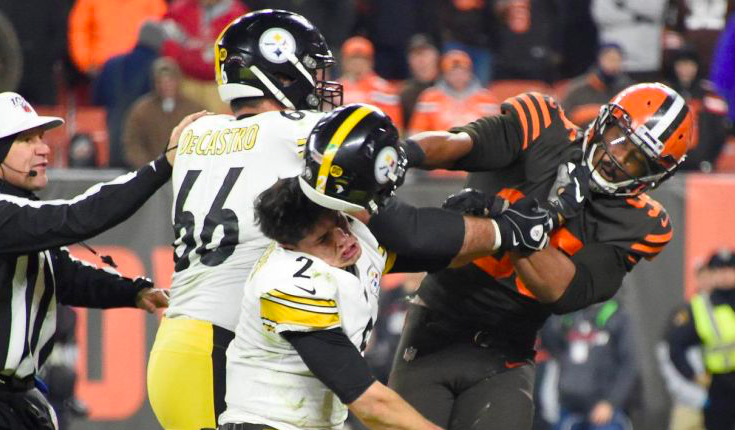
The Sunday Still: Quid meets quo and Last Play
Photojournalist Patrick Farrell has joined the blog with his weekly feature, The Sunday Still. Farrell selects one image each week that showcases the best photojournalism by photojournalists from around the world. The feature runs weekly in The Sunday Long Read. The goal of the newsletter, edited by Don Van Natta Jr. and Jacob Feldman, is to put the week’s best journalism in your hands every Sunday morning.


Monday, August 19, 2019
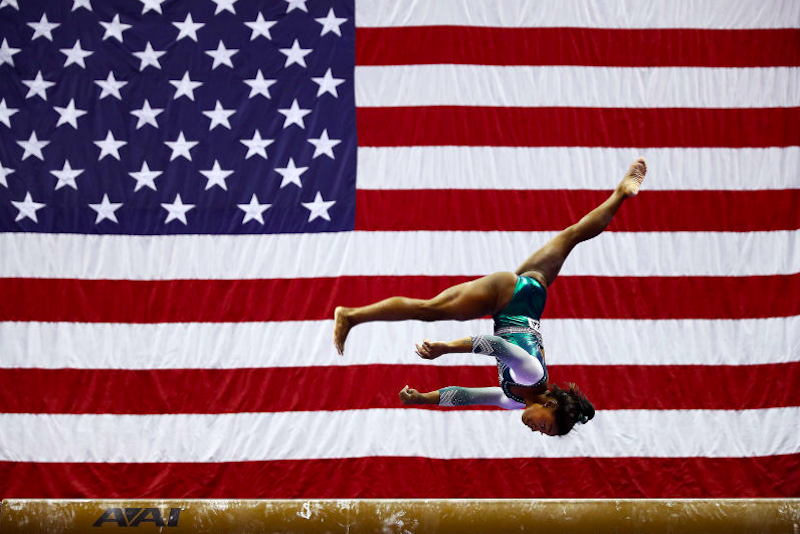
The Sunday Still: Flipping into history
Photojournalist Patrick Farrell has joined the blog with his weekly feature, The Sunday Still. Farrell selects one image each week that showcases the best photojournalism by photojournalists from around the world. The feature runs weekly in The Sunday Long Read. The goal of the newsletter, edited by Don Van Natta Jr. and Jacob Feldman, is to put the week’s best journalism in your hands every Sunday morning.
|
Monday, December 9, 2013
The Real Cost Of Copyright Theft For Agence France Presse And Getty Images: $9M And Trashed Reputations

Winners: Daniel Morel with attorney Joseph Baio, photographer Phyllis Galembo and attorney Emma James. Photo © Jeremy Nicholl
The first thing one sees upon entering the New York Southern District Federal Court in Manhattan is a large circular plaque of the man who gives the courthouse its name. “Thurgood Marshall”, reads the inscription, “American Hero.”
Just before 2pm last Friday another hero walked down the courthouse steps. Almost four years after two of the biggest names in the photography business stole eight of his images of the 2010 Haiti earthquake, then used all their legal resources to try to crush him, photographer Daniel Morel emerged triumphant. After a week of drama and humiliation in court, Agence France Presse and Getty Images had been ordered to pay Morel $1.22m damages for wilful copyright infringement and violations of the Digital Millennium Copyright Act.
It’s hard to overstate the calamity that has befallen AFP and Getty. The $1.22m damages — the maximum possible — awarded to Morel are what garnered the headlines, but they are merely the tip of the iceberg that ripped through the AFP and Getty edifice last Friday afternoon. For one thing the financial costs will be far higher. Nobody knows for sure what the meter is running at, but informed legal sources put the total so far at around $9m: that includes the damages, Morel’s legal defence costs, and those of AFP and Getty. As the losing defendants the agencies will almost certainly be expected to pick up the entire tab.
But — really — it’s not all about the money. Far more serious to AFP and Getty than any financial cost is the damage done to their professional reputations. They now inhabit a unique position in the history of the photography business: the only major digital licensors to have been found liable in a Federal court for the wilful violation of a photojournalist’s copyrights in his own works.
AFP and Getty lost for three reasons. First, they were guilty as sin: the evidence showed that. But of course guilt doesn’t necessarily mean you lose in court, especially when you’ve got the best law money can buy sitting on your side of the courtroom.
Which leads to the second reason: the agencies had invested heavily in legal firepower, but not wisely. How heavily? Both Getty and AFP had four US attorneys in court, and the French agency supplemented their team with a further three lawyers from Paris: a total of eleven lawyers in all. Then there were the paralegals, assistants and witnesses: the defence teams occupied the entire left hand well of the court and spilled over into the public gallery. Taken as a whole, the entire defence all but outnumbered the rest of the court, including the Morel team, the judge, the courtroom staff and the jury.
![New York, USA, 22/11/2013. Agence France Presse lawyers including lead attorney Joshua Kaufman [right] outside the Thurgood Marshall US Courthouse after losing their willful copyright infringement case against photojournalist Daniel Morel.](https://lh3.googleusercontent.com/blogger_img_proxy/AEn0k_tIJs8SOWSRhy5R3Fsk0pVPHG5Lsj5HQEWfcaOszjZ5M-48bu9nEBHCDImOAxKbbfA6F87l6n9eqMocdN3Tcls4QYxRVZZiUtlJd9c-QmkbpmIOeCmi4kugbStruc-aOqDs1B3fSxwD8OFuJ2c=s0-d)
Losers: AFP lawyers including lead attorney Joshua Kaufman [right] outside court after the Morel trial verdict. Photo © Jeremy Nicholl
But quantity can’t replace quality, and in the latter respect the defence was simply woeful. To be fair, the material the defence lawyers had to work with was, especially in the case of AFP, extremely weak. But these were not cheap corner shop lawyers. Between them AFP and Getty were burning through an estimated $10,000 an hour in court: for that kind of money you expect lawyers who can produce legal silk from even the most unpromising sow’s ear. Instead the defence were outclassed and steamrollered at every turn by the Morel duo of Joseph Baio and Emma James. Baio’s closing speech in particular was a bravura performance. Picking through the evidence, alternately mocking and outraged at the defence, he turned to the jury and declared: “I’m going to show the testimony, and you will be the judge.” By the time he sat down after 80 minutes the jury had little alternative but to find the agencies liable and throw the book at them. So impressive was Baio’s performance throughout the trial that the Litigation Daily gave him theirLitigator of the Week award. Yes, really: this is America after all. Think of it like the Dodge City Gunslinger of the Week award.
And then there was the third reason: that jury. The tiny band of Morel supporters in court fretted over this. The photo business was complicated. So was copyright. The jury knew nothing about either. And they all looked a bit…ordinary. Working class even. Perhaps they wouldn’t understand all this really hard stuff. But those Morel supporters were wrong: the jury was perfect for Morel for all the reasons his supporters thought they weren’t. They looked at Morel and saw an ordinary Joe just like them who’d been dumped on by multi-billion corporations run by the 1%; then they looked across the court and saw the 1%.
Seated on the far right of the court, facing the serried AFP and Getty ranks on the far left, the jury was as physically distant from the defence as could be. If that gulf between defence and jury could be summed up in a single sentence, Getty lead counsel Marcia Paul provided that sentence in her opening address: “He’s asking you to make him the best paid news photographer on the planet ever.” The jury — that mix of middle class and blue collar — looked across at the soccer team of $1,000 an hour defence attorneys strutting in their designer suits and thought: “Know what Marcia? That’s a great idea.”
Daily reports from the court revealed much of the defence testimony as pure comedy gold. Getty Images Senior Director of Photography News and Sports Pancho Bernasconi served up 57 varieties of “I cannot recall” when questioned by Baio, then promptly demonstrated total recall of the same events when questioned by his own attorney. AFP Photo Desk Chief for Europe and Africa Benjamin Fathers found himself explaining that he’d managed to spend a fortnight in Haiti without delivering promised equipment to Morel from his agent Corbis: even though Morel and AFP were living in the same hotel. AFP Marketing and Sales Director Gilles Tarot attempted to explain to Morel attorney Emma James that cheap sales were all part of the agency’s charity approach: it was their mission to make information available to everyone, so naturally they charged less in developing countries. “There’s a five euro sale here in Austria,” observed James innocently. Then, biting her lip so as not to laugh: “Is Austria a developing country, Mr Tarot?”

The front page haul from the Amalvy heist.
And then there was Vincent Amalvy, the heist merchant himself. Nobody could genuinely describe the AFP editor’s performance as comic. Guilty though he was, it’s just not that funny watching someone skewered as expertly as Amalvy was by Baio. Before the trial Morel’s attorney had expected to spend about four hours on Amalvy: in the end he spent almost eight hours over two days. Understandably Baio just couldn’t let Amalvy go, for the AFP editor was a cross-examining attorney’s dream witness: the gift that kept on giving.
Perhaps the most extraordinary aspect was that none of these witnesses were called by Morel’s lawyers. These were defence witnesses: these were the people that AFP and Getty actually thought would help them win. In his closing arguments lead AFP counselJoshua Kaufman pointed the jury to the fact that the Morel team had only produced one witness, the photographer himself. But doing so only showed that Kaufman had misunderstood the events of the previous seven days. The Morel team didn’t need to provide their own stream of witnesses because the defence provided all the dirt needed.
And so to the inevitable appeal. Inevitable because although common sense says that AFP and Getty should have abandoned this fight long ago, it’s clear that common sense is in short supply at the two agencies. Inevitable because like two punch-drunk brawlers, the agencies not only don’t know when to stop, they can’t even remember how. But most of all inevitable because legally they have little choice: having fought bitterly to avoid being found liable for wilful infringement, they will desperately feel the need to have the verdict overturned.
That’s because the rules inside court bear only a passing resemblance to the logic of the outside world. What can appear outside as relevant information critical to the case — like the origins of the dispute in question, or the prior history of the opposing parties — can be made to simply disappear inside the legal system. The Morel trial had a shining example of this phenomenon: although the trial had its genesis in AFP’s attempt to sue the photographer, the jury weren’t allowed to know that. In a pre-trial conference the judge accepted AFP’s argument that such knowledge would unfairly prejudice the jury against the defendants. The jury was therefore under the impression that it was Morel, not AFP, that fired the first legal bullet.
Now, as things stand today, were AFP or Getty to face another claim for infringement from a different photographer, defence would be even more difficult than in the Morel case, for any jury could be told of the Morel verdict: the defendants would be presented as serial infringers. But if AFP and Getty can have the Morel verdict overturned, that verdict would for all practical terms in a future courtroom cease to exist: the defendants would appear to have no prior infringing history. The appeal gamble will probably not pay off, and will be more wasted money, but what’s another million or so when you’re already $9m in the hole?

AFP & Getty executives try to apportion blame. Photo © Jeremy Nicholl
But first there will be some bloodletting. Nobody – even a $3.3bn company like Getty – likes to get stuck with a share of a $9m legal bill, especially when they feel they’ve done no wrong. There was a fair amount of finger pointing in court, with each agency blaming the other for the debacle, but the two sides were constrained by court protocol. Now, away from the glare of publicity, they have no reason for restraint: somewhere in a corporate conference room gloves will be removed, knuckle-dusters donned, knives produced. Getty will point to a clause in their suppliers’ contract that indemnifies them against legal costs resulting from suppliers’ actions. AFP will respond that they trained Getty staff in how to monitor, and if necessary correct or remove AFP material from Getty’s systems. There is no common ground here and currently little love lost between the two partners, so both will be quite prepared to spend more legal dollars slugging it out. This will of course be kept as quiet as possible. If there’s one thing the two media giants can definitely agree on, it’s that public and press will be excluded from the next stage of the Morel saga.
AFP have already gone silent, but in their fury Getty have been unable to avoid a further public relations blunder by saying what they really think about the Morel verdict. In court the agency’s lawyers were eager to appear contrite, but with defeat all pretence disappeared . Speaking to the British Journal of Photography, Getty general counsel John Lapham claimed that Morel had merely been seeking “notoriety” rather than justice. Stay classy, Getty.
And finally, what about all those photo industry experts? The friends of photography? The ones who were so sure that AFP and Getty had done no wrong? Most are maintaining an undignified silence, but at least one has been foolish enough to side with John “notorious” Lapham. Perhaps it’s time for such people to step back, take a deep breath and admit the truth: that a seven person jury, with no connection to or experience of the photography business, understood that business and photographers’ copyright better than the self-appointed experts.
UPDATE 30/11/2103. AFP Photo Director Responds To Trial Defeat, Suffers Total Memory Loss
Apparently amnesia is infectious: who knew? Agence France Presse have published a responseto the Morel verdict from Francis Kohn, and it appears that the AFP Photo Director has been struck down by the same memory loss that afflicted Getty witness Pancho Bernasconi in court. Kohn’s article is so riddled with errors and omissions of fact it’s hard to know where to begin, but here are just a few of the highlights:
- “Morel sues AFP. All efforts at reconciliation fail.” In fact it was AFP who first sued Morel, seeking punitive damages from the photographer, not the other way round.
- Kohn implies that AFP tried to settle with Morel soon after heisting the images. AFP made no offer to settle before attempting to sue the photographer.
- “The in-house rules at AFP for using social networks lacked precision. A lot of journalists had, at the time, only the vaguest notion of copyright when it came to Twitter, Facebook and other social networks.” In fact AFP had very clear guidelines on social networks in place at the time, and these were shown in court. Amalvy admitted under cross-examination that he had simply ignored the guidelines.
- “He [Amalvy] comes across some very good photos on the TwitPic account of a certain Lisandro Suero, who is unknown to AFP. As it turns out, Suero is a very young person from the Dominican Republic who appropriated Morel’s images and posted them on his own account under his name. Amalvy is unable to get hold of Suero.” In court Amalvy made the unlikely claim that he had seen the images on Suero’s TwitPic account, yet had not seen Suero’s associated Twitter account that made plain Suero was in the Dominican Republic and therefore could not be the Haiti photographer. Neither the cross-examining lawyer nor the jury believed him.
- “The credit on the images is changed, with Morel’s name substituted.” AFP never replaced Suero’s name with Morel’s. They simply re-transmitted the images with a new credit line, resulting in multiple copies with differing credit lines in circulation.
- “At that point [two days after the earthquake], AFP withdraws the pictures from its image bank, and informs its clients of its action.” AFP never issued a kill notice for the Suero credited images. It was to be almost two months before AFP began contacting individual clients regarding the infringing images.
Publishing such a false account of events on the agency’s own website merely serves to call into question AFP’s credibility as a news organisation and toxify the brand. For AFP reporters in the field who have to deal with inconvenient things like facts, Kohn’s fictionalised account of the Morel events must be a cringeworthy embarrassment. Fortunately the post is open to comments from anyone who wants to help refresh Kohn’s memory.
The Full Story Of The AFP & Getty $9M Road To Defeat:
Agence France Presse unveil an avant-garde new business model: steal news photos, then sue the photographer when he objects.The founder of the Visa Pour L’Image photojournalism festival expresses some surprising opinions on the case.J-F Leroy attempts to clarify his defence of the behaviour of the agencies that coincidentally happen to finance his photo festival.It’s important that a business strategy be consistent: AFP get caught in another photo heist.In the absence of courtroom action a website provocatively heists some Visa Pour L’Image photos – much internet rioting ensues.In which a photo business expert proves his inability to understand some straightforward legal terms.“We shall prevail” announce the AFP lawyers at their first court appearance – and promptly lose.An AFP editor finally states the obvious: but only to her colleagues in internal agency emails.A pattern emerges as the case reaches its next courtroom stage – and AFP lose again.It’s only days to disaster now, but despite all the signs AFP and Getty fail to see what is about to befall them.
Previously on this blog.
by Samuel Lewis
|
Wednesday, January 30, 2013
The Legal Lens: Judge Rules On Daniel Morel Twitter Photo Grab
The Legal Lens
with Samuel Lewis
Q. Last month, we
talked about Instagram and the brouhaha over changes to its Terms of Service
(TOS). Has the new TOS gone into
effect?
A. They have, although
it seems the uproar over the TOS has quieted down. Unfortunately, the TOS contains the same language that
caused me concern when we discussed the issue last month.
Q. Have there been any
other recent developments?

A. Well, not with
Instagram. However, there has been
a development in a significant case involving Agence France Presse, Getty, the
Washington Post, photojournalist Daniel Morel and Twitter’s TOS.
Morel was in Haiti in January, 2010, when the earthquake
hit. He then posted some of his
images to Twitter. Shortly after
Morel uploaded the images, they were reposted by another Twitter user. AFP’s Director of Photography for North
and South America found the re-tweeted images and sent eight of Morel’s images to
the AFP photo desk. AFP ultimately
transmitted the photographs to Getty, who in turn provided the images to the
Washington Post (the Post published four of Morel’s images). Because of the way the images were
originally obtained—from a Twitter account other than Morel’s—the images
weren’t even credited to Morel initially.
After learning that the images belonged to Morel, and that
AFP and Getty did not have permission to publish or license the images, AFP
filed a petition against Morel in the U.S. District Court in New York seeking a
declaration that AFP use of Morel’s images was covered by Twitter’s TOS, and
therefore, the AFP did not commit copyright infringement. Morel countersued AFP for copyright
infringement, and also asserted claims of infringement against Getty and the
Washington Post.
On January 14th, U.S. District Judge Alison J. Nathan released a
58-page summary judgment opinion (summary judgment is issued when a court is
able to resolve aspects of the case—and sometimes the entire case— by making
final rulings on legal issues based upon undisputed facts; summary judgment
prevents a court and the parties from wasting time with a trial when there is
no dispute over the facts and it is just a matter of applying the law to those
facts).
Under Twitter’s TOS, users like Morel grant Twitter the
right to make content “available to other companies, organizations or
individuals who partner with Twitter for syndication, broadcast, distribution
or publication of such” content.
Similar to Instagram’s TOS, Twitter’s TOS provides that any such use of
content may be made without compensation to the user who posted the content to
Twitter. AFP contended that this
language was broad enough to give it the right to use images posted to Twitter.
With regard to Twitter’s TOS, the Court ruled squarely in
Morel’s favor. As the Court
explained, “it suffices to say that based on the evidence
presented to the Court the Twitter TOS do not provide AFP with an excuse for its
conduct in this case . . . Put differently, the evidence does not reflect a
clear intent to grant AFP a license to remove [Morel’s images] from Twitter and
license them to third parties . . . .”
The Court went further when addressing both AFP and the Post: “AFP and the Post raise no other
defenses to liability for direct copyright infringement, and, in fact, concede
that if their license defense fails—as the Court has determined that it
does—they are liable for direct copyright infringement.”
Unlike AFP and the Post, Getty also argued that it is not liable
for copyright infringement because it is entitled to the benefit of the
safe-harbor (limited immunity) applicable to online providers under the
DMCA. The Court found that there
is a factual dispute, and thus, Morel will have to proceed to trial against
Getty and let a jury decide if Getty qualifies for the limited immunity under
the DMCA. Similarly, the question
of whether AFP, the Post and Getty are willful infringers is an issue that will
have to be resolved at trial.

Q. This sounds like a good
decision for photographers. Is it?
A. The decision is good
from the standpoint that the Court did not find the language of Twitter’s TOS
to be sufficiently broad to permit agencies like AFP to license the use of the
images to others. While the
Twitter TOS is broad enough to allow Twitter and others to republish the
tweets, including images, it was not interpreted so broadly as to permit AFP or
the Post to use the images without consent (although the way that the next
court interprets the Twitter TOS may be different).
However, the Court’s analysis regarding damages was not so
good for Morel. In fact, the Court
squarely rejected Morel’s theory of damages, which would have resulted in an
award of statutory damages against AFP and Getty “in the tens or hundreds of
millions of dollars.” AFP and
Getty argue that they are only liable for one award of statutory damages each—a
maximum of $30,000 per image for infringement, and up to $150,000 per image for
willful infringement—and not responsible, as Morel contended, for an award of
statutory damages for every subscriber who used the images. The Court ultimately ruled that “AFP
and Getty are, at most, each liable for a single statutory damages award per
work infringed.”
With the Court’s decision on damages, AFP, the Post and
Getty have a considerably better idea as to their possible exposure—the amount
that may be awarded—should the case proceed to trial. Unfortunately, those
damages are considerably less than Morel was seeking in the case.
Q. What should
photographers take away from this decision?
A. If there’s one thing
to take away from the decision, it is the importance of reading the fine print
when using social media sites.
Much of the decision in Morel’s case turned on the Court’s analysis of
the Twitter TOS, and considering each term and phrase within that TOS. However, since the TOS vary from one
social media site to another, the same phrase that tipped the scales in favor
of Morel in Twitter’s TOS might not be present in the TOS for any other social
media site.
RELATED STORIES: Lens Blog: New York Times; PetaPixel
Samuel Lewis is a Board Certified Intellectual Property law
specialist and partner at Feldman Gale, P.A. in Miami, Florida, and a
professional photographer who has covered sporting events for more than
twenty-five years. He can be
reached at SLewis@FeldmanGale.com or SLewis@ImageReflex.com.
Note: The information appearing in this blog entry is not, nor is
it intended to be, legal advice, and should not be construed as such. Rather, the information is provided
solely for educational purposes by providing general information about the
law. This blog is not a substitute for legal
advice from an attorney licensed to practice in the state where your business
is based or where you live.
Subscribe to:
Posts (Atom)

